
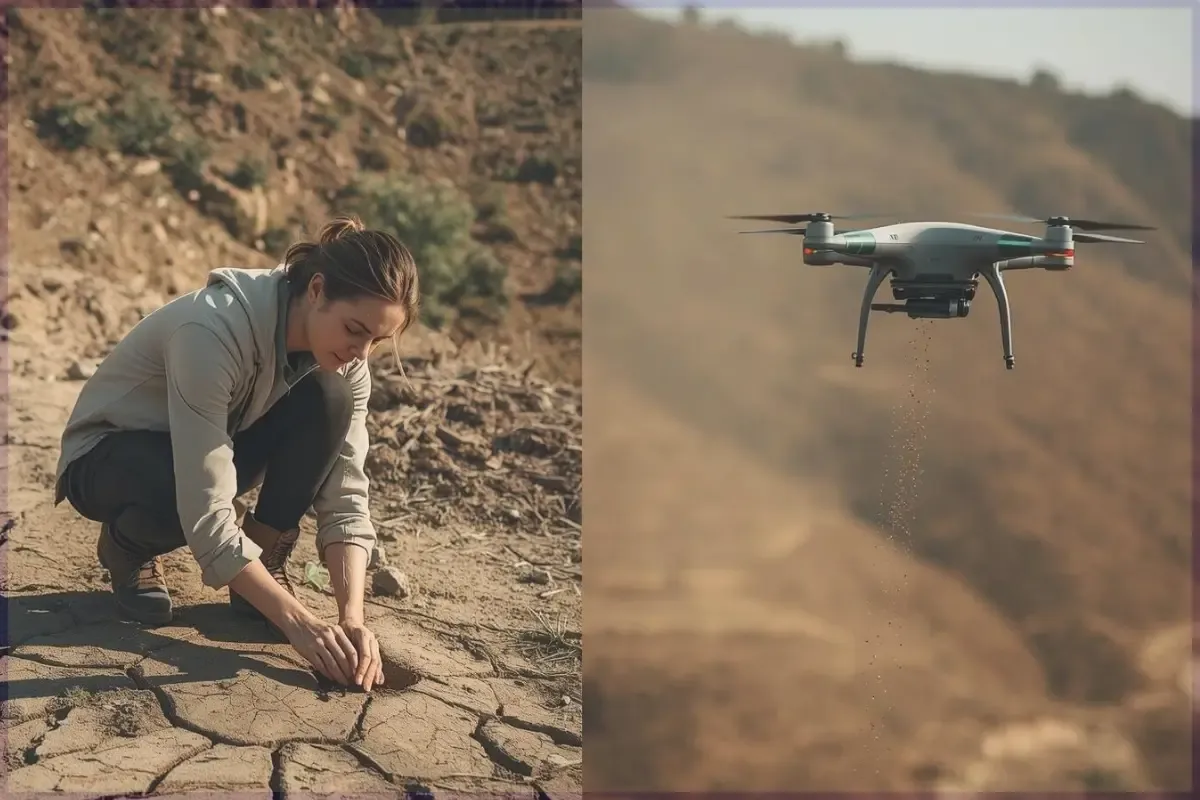
Tree planting has barely changed in a century. Workers carry bags, dig holes, press seedlings into the ground — one tree at a time. It works, but the planet is losing forests far faster than human hands can restore them.
That's exactly the gap drones are now filling.
In 2026, drone technology is turning reforestation from a slow, labor-heavy effort into a fast, data-driven, and scalable movement. From fire-scarred hillsides in Australia to flooded mangrove coasts in Myanmar, drones are planting tens of thousands of trees daily — reaching terrain no human crew could safely access.
This guide walks you through how it works, who's doing it, and what honestly still needs to improve.
Why Manual Planting Can No Longer Keep Up
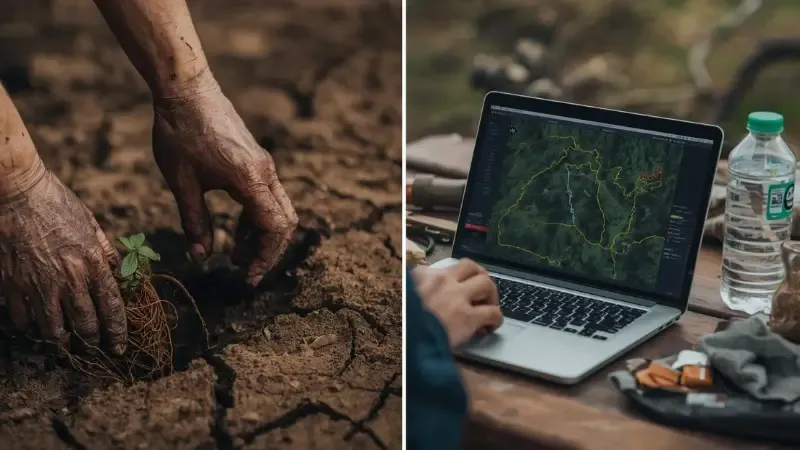
Hand planting works beautifully at small scales. But the world needs forests restored across millions of hectares — and that's where the old approach breaks down.
Deforestation and wildfires are destroying tree cover faster than volunteers can replace it. In 2024 alone, the planet lost millions of hectares of forest. Restoring even a fraction of that by hand would take decades and enormous resources.
There's also the terrain problem. Many of the most degraded areas sit on steep slopes, on remote islands, in waterlogged valleys, or on land still recovering from fire. Sending crews into those locations is dangerous, expensive, and often impossible.
Drones address both problems directly. They fly anywhere, move fast, and can return to the same site repeatedly without putting anyone at risk.
Still wondering exactly when hand planting beats drone seeding and vice versa? Read our full breakdown of drones vs hand planting in 2026 before choosing an approach.
How Drone Tree Planting Actually Works
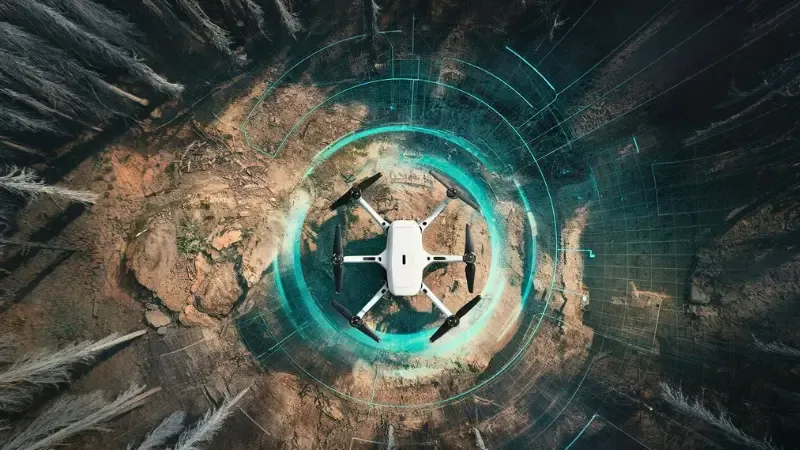
This isn't about flying over fields and hoping seeds land well. The process is more precise — and more scientific — than most people realize.
Mapping the Land Before a Single Seed Drops
Before planting begins, drones scan the target area using cameras and sensors. They analyze soil quality, moisture levels, terrain contours, and what's already growing. This creates a detailed map that guides exactly where each species should be planted.
According to Charlotte Mills, chief ecologist at AirSeed Technologies, these initial mapping images are critical to the planning of planting missions. Without them, you're guessing. With them, every seed has a reason for being exactly where it lands.
Biodegradable Seed Pods, Not Loose Seeds
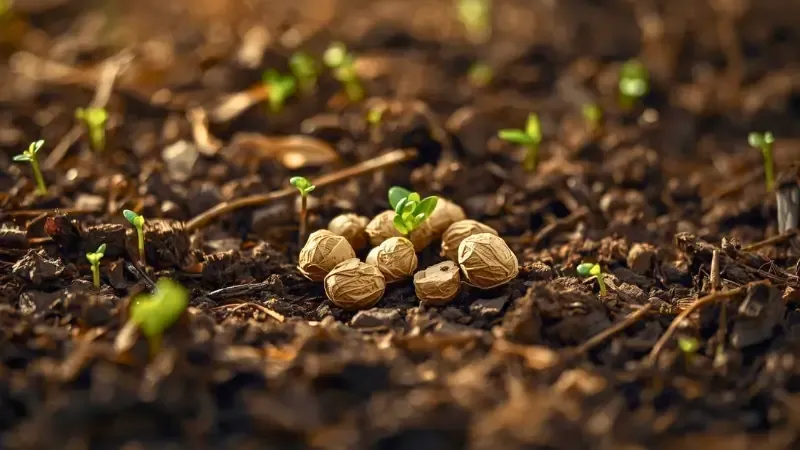
Most drone systems use custom seed pods rather than scattering loose seeds. Each pod contains a seed surrounded by nutrients, minerals, soil enhancers, and a protective biodegradable coating. The coating shields the seed from birds and insects, holds moisture after rain, and gives the young root system a strong early start even in poor soil.
The pods are made from waste biomass and break down completely over time, leaving nothing harmful behind.
Autonomous Flight, Precise Delivery
Once loaded, the drone follows a pre-programmed GPS route and drops seed pods at a precise rate — some systems reach one pod per second. A single drone can plant tens of thousands of seeds in a working day. One operator can manage multiple drones simultaneously, covering ground that would take a large human crew weeks to reach.
Every pod's coordinates are recorded. That means the team knows exactly where each seed landed and can return to check on it later.
Ongoing Monitoring After Planting
The drone's job doesn't end when the seeds are in the ground. The same machines return to project sites regularly, capturing aerial images that show how seedlings are growing. AI systems flag early signs of drought stress, disease, or pest damage so teams can respond before problems spread.
This monitoring stage is where many older planting programs failed — they planted trees and walked away. Drone programs build the follow-up from the start.
The Companies Making This Real Right Now
Several organizations have moved past the pilot stage. These are the ones with verified results in 2026.
AirSeed Technologies — Australia
AirSeed Technologies has turned aerial reforestation into a working reality across some of Australia's most fire-damaged and flood-scarred landscapes.
Their autonomous drones can drop up to 250,000 seed pods per day and have been used to restore koala habitat in New South Wales, regenerate flood-damaged forests in Lismore, and replant fire-cleared landscapes across remote Australia.
Andrew Walker, CEO and co-founder of AirSeed Technologies, put it plainly in an interview with WWF Australia:
"**According to Andrew Walker, CEO and co-founder of AirSeed Technologies, their autonomous drones complete planting missions at roughly 25 times the speed of a conventional ground crew, while cutting costs by around 80% compared to traditional methods. Walker shared these figures in an interview with WWF Australia.**"
Their approach focuses on native species and biodiversity — not monoculture plantations — which means the forests they help restore actually support local wildlife over the long term.
1. Flash Forest — Canada
Flash Forest was among the first to commercialize drone reforestation in North America. Their drones fire seed pods into the ground at high speed, replanting burned landscapes at roughly 10 times the pace of a manual crew and at a fraction of the cost.
They have committed to a target of one billion trees by 2028 and are actively working toward it across Canada's fire-affected regions.
2. Dendra Systems — UK and Global
Dendra brings together ecologists, AI engineers, and drone operators as one integrated team. They have worked on mangrove restoration in Myanmar and large reforestation projects across multiple continents, including a major partnership with WWF Australia, the Australian government, and the Turner Family Foundation to replant more than 20,000 hectares of degraded forest.
What sets Dendra apart is the combination of ecological expertise with aerial precision. Every project is planned around local species and long-term ecosystem goals, not just tree numbers.
3. Mast Reforestation — United States
Mast uses a hybrid model that combines drone seed planting across large open areas with careful hand planting in denser or more sensitive zones. Their Henry Creek project in western Oregon reforested around 121 hectares using this combined approach. According to Mongabay, the project is projected to remove more than 200,000 metric tons of carbon from the atmosphere over the next 200 years.
World Vision Kenya and Kenya Flying Labs — Africa
In Tana River County, Kenya, World Vision Kenya and Kenya Flying Labs are using drones to plant indigenous trees on degraded land. This initiative shows that drone reforestation is not limited to well-funded private companies — community-driven programs in Africa are using the same technology with strong local involvement.
What Makes Drone Planting Worth Supporting
The advantages go well beyond speed, though speed matters enormously.
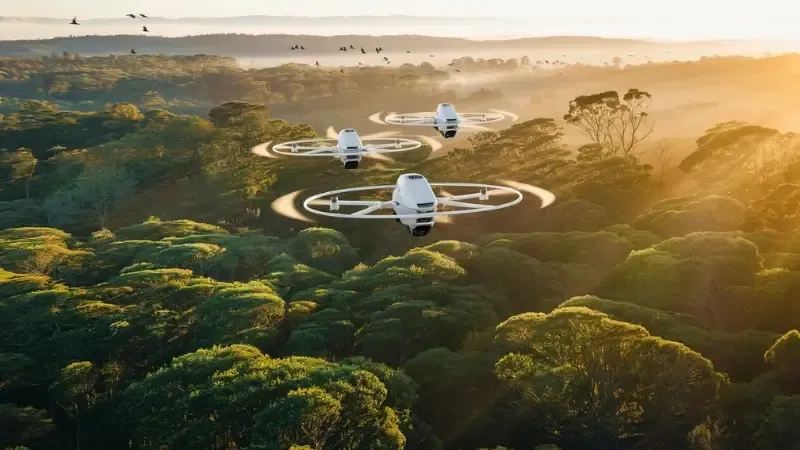
Drone systems reach land that human crews cannot. Steep hillsides, post-fire zones, remote islands, and coastal mangrove areas are all environments where drones work, and people cannot safely operate at scale.
The cost reduction is significant. AirSeed reports planting at 80% lower cost compared to traditional methods. Flash Forest operates at roughly 20% of the cost of conventional planting. As drone hardware continues to improve, those numbers keep improving.
Data quality is better than anything manual projects could produce. Because drones log every seed's exact GPS coordinates and return to capture ongoing growth data, it becomes possible to track survival rates and carbon storage in ways that older programs never could. This matters directly for carbon credit verification — and for proving that a project is actually working.
You can read more about how these results feed into the official verification process in our guide on how tree-planting projects are verified.
What Drone Planting Still Hasn't Solved
Being honest about the limitations matters — especially if you're evaluating whether to support a project.
Germination rates from aerial seeding are lower than those from hand planting. When a person plants a seedling, they prepare the soil, carefully place the roots, and pack everything in. A seed pod fired from the air has to do all that work on its own. The biodegradable pod technology helps significantly, but hand planting still leads in survival rates in many conditions.
Seed supply is a real bottleneck. Planting millions of trees requires millions of seeds — and those seeds need to come from diverse, locally appropriate native species. Sourcing enough seed stock at that scale is one of the biggest practical challenges the industry currently faces.
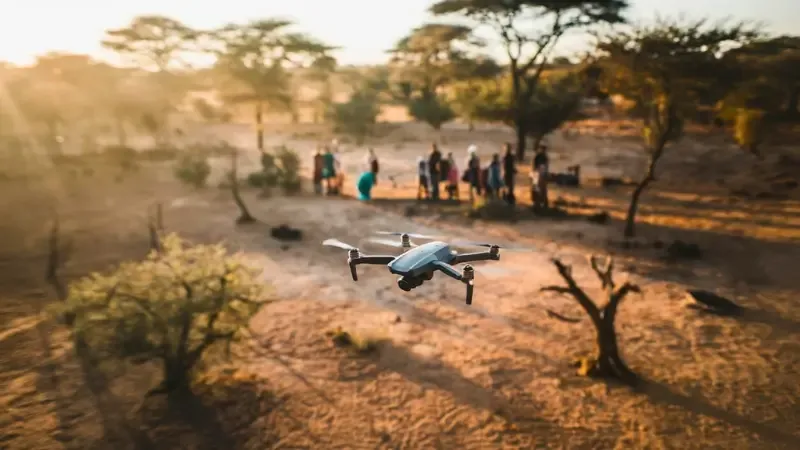
Access to this technology is still uneven. Most advanced drone planting systems operate in wealthier, industrialized countries. Many of the forests most urgently needing restoration are in regions where this technology remains financially or logistically out of reach. Programs like Kenya Flying Labs are working to change that, but it is still early.
Drones are not a replacement for planning. Flying over degraded land and dropping pods produces poor results without proper site preparation, the right species mix, community engagement, and long-term monitoring. The best programs treat drones as one tool within a broader, well-designed restoration strategy.
What's Coming Next
The technology is developing quickly. Swarm planting — multiple drones working simultaneously across a large area, coordinated by a single operator — is moving from research into early commercial use. AI-powered species matching is helping teams predict which trees will survive not just today's climate but the warmer, drier, or wetter conditions expected in coming decades.
Drone hardware costs continue to fall, meaning smaller nonprofits and government forestry departments are gaining access to tools that were only affordable to large companies a few years ago. Within a few years, drone reforestation could be as accessible as a solar panel — something communities and local organizations can deploy themselves.
Are Drone-Planted Trees Properly Verified?
This is the right question to ask before supporting any project. Planting a tree is only meaningful if it survives, grows, and genuinely removes carbon from the atmosphere.
The encouraging answer is that drone monitoring makes verification more reliable than older manual methods. Because drones return regularly and capture high-resolution data, survival rates and carbon storage can be tracked and reported to carbon registries with a level of accuracy that was simply not possible before.
Companies like AirSeed and Dendra build this monitoring into their core service — it's not an optional extra, but the foundation of how they demonstrate results to clients and the public.
Understanding the full verification process helps you judge whether a project you're considering is genuinely credible. Our guide on how tree-planting projects are verified covers this in detail.
Drones Help — But Forests Need More Than Technology
Drone tree planting in 2026 is real, field-tested, and genuinely exciting. It solves problems that manual planting never could — speed, scale, access, and ongoing monitoring. The companies and organizations building these systems are doing meaningful environmental work.
But a drone drops a seed pod. A forest takes decades and a whole ecosystem to grow.
The strongest reforestation programs combine drone precision with local ecological knowledge, the right native species, genuine community involvement, and long-term commitment. When all of those elements come together, drone planting becomes one of the most powerful tools available for restoring what the planet has lost.
To understand the full picture of what healthy reforestation looks like — and the real-world benefits it delivers — read our guide on reforestation benefits in 2026. And if you're new to the subject, start with what reforestation actually means before choosing a project to support.