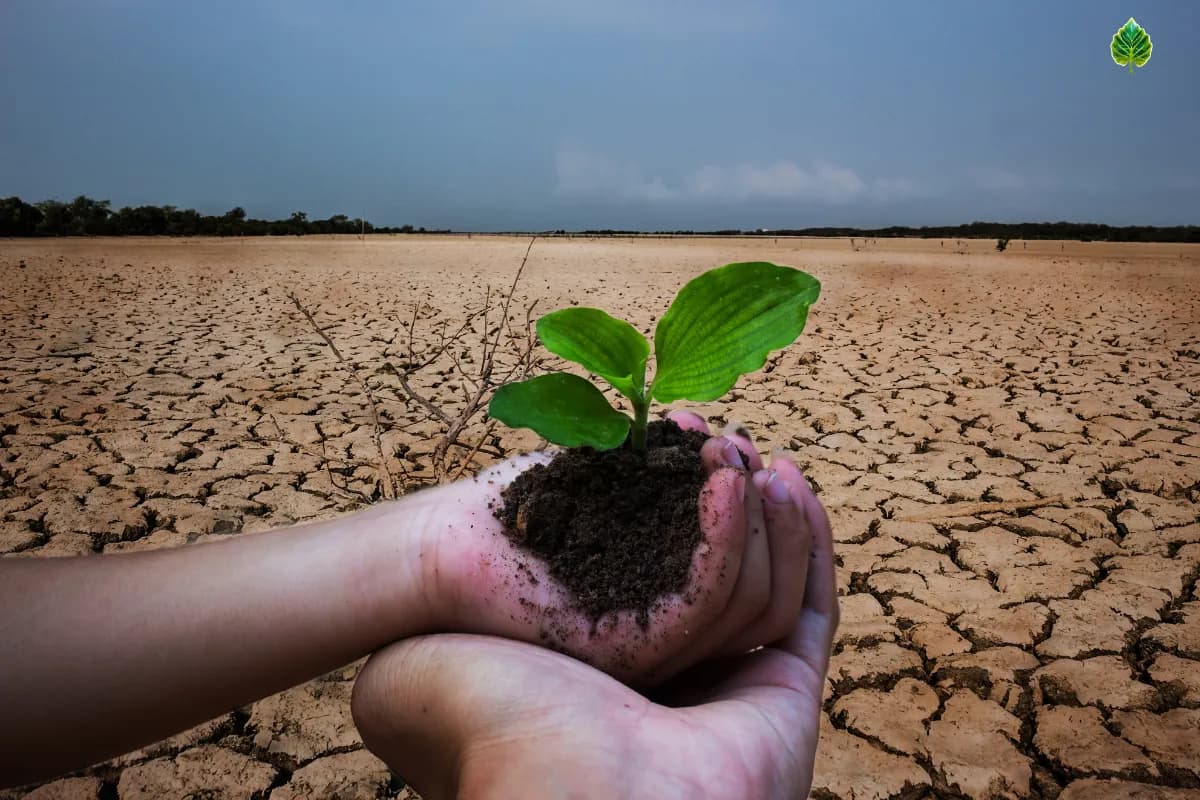
Reforestation means bringing forest back to land that lost it — to wildfire, chainsaws, or worn-out farmland. In 2026 the practice anchors global climate strategy, because a replanted forest pulls carbon from the air, rebuilds watersheds, and puts people to work in the same season.
This guide defines reforestation precisely, separates it from afforestation, and maps the tools and projects delivering real impact this year. At Skylimate Green, we track the platforms that make restoration measurable — and show you how to join in.
What Is Reforestation? The Basics
Reforestation replants trees where forest grew before and disappeared, whether a burn scar in Canada or a logged slope in India's Western Ghats. The target: the whole ecosystem — wildlife habitat, soil biology, and water cycles returning together, not just a row of saplings.
Methods shift by region. Canadian boreal crews protect local seed sources and let natural regeneration lead. Australian post-fire teams plant native seedlings where seed banks ran out. Both paths rebuild canopy cover; only the starting point differs.
Key Updates in Reforestation 2026
- Tropical loss slows: Primary rainforest loss fell 36% in 2025 versus 2024 — the clearest slowdown on record (WRI Global Forest Review).
- Monitoring gets a new name: Global Forest Watch relaunched as Global Nature Watch, expanding coverage beyond forests with 65+ datasets (Global Nature Watch).
- UN implementation year: The 2026 Global Climate Action Agenda Work Programme advances 120 practical restoration plans toward COP31 in Antalya (UNFCCC).
- Ghana scales up: The Tree for Life initiative targets 30 million seedlings in 2026 after surpassing 31 million in 2025 (Ministry of Lands and Natural Resources).
- FAO flagship lands: The State of the World's Forests report puts restoration finance and forest-based livelihoods at the center of the 2026 agenda (FAO).
How Does Reforestation Differ from Afforestation?
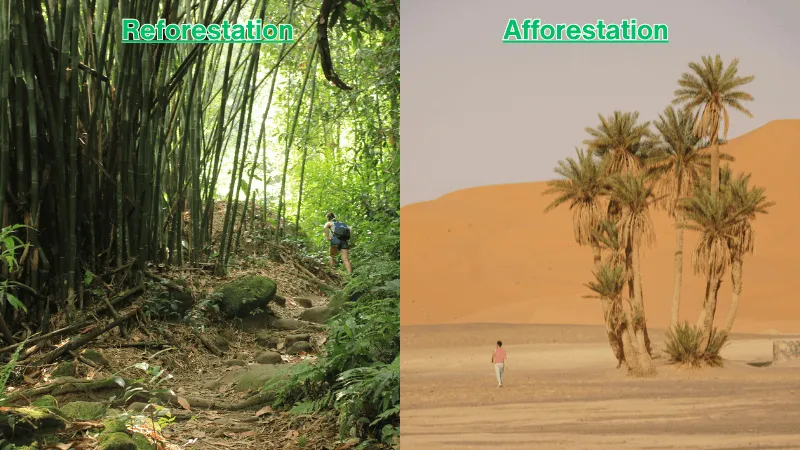 Reforestation returns forest to land that had it; afforestation plants where no forest stood before.
Reforestation restores land that recently held forest — think Western Ghats crews rebuilding native cover after decades of clearing. Afforestation plants trees where forest never stood, like Sahel shelterbelts that hold back desertification.
Both strategies matter, but they serve different goals. Reforestation repairs a lost ecosystem; afforestation builds a new one. In 2026, repair wins priority because degraded former forest land regrows faster and stores more carbon.
Recommended read: Afforestation vs. Reforestation – Key Differences and Use Cases.
Why Reforestation Matters: Healing Damaged Ecosystems
 A jaguar moves through regenerating forest in the Brazilian Amazon.
When logging or fire strips an ecosystem, restoration reverses the damage. Reforested zones become safe habitat again — jaguars and macaws recolonize regrowing Amazon patches within a few seasons.
Roots do quiet work underground. They anchor flood-prone slopes in the United Kingdom and filter runoff before it reaches rivers like France's Rhône. Those services ripple outward into clean water, stable farmland, and public health.
Explore more: Global Nature Watch - Open Source Forest Monitoring.
Key Benefits of Reforestation for the Planet and People
 Five benefits make reforestation a 2026 priority.
Reforestation pays out across five fronts. For the full breakdown with 2026 data, read our reforestation benefits 2026 guide.
1. Combats Climate Change
A mature tree absorbs up to 22 kg of CO₂ a year — the working figure most planting organizations plan around — and global forests together pull in a net 7.6 billion metric tons annually, according to WRI.
2. Preserves Biodiversity
Forests shelter about 80% of land species, and replanting reopens habitat corridors. Yet the world has still lost 420 million hectares since 1990 (UN FAO), which is why pace matters as much as area.
3. Improves Air and Water Quality
Leaves trap particulate pollution while roots filter runoff. Well-placed urban trees cool city air by 2–8°C, cutting heat stress and cooling demand (FAO - State of the World's Forests).
4. Supports Livelihoods
More than 1.6 billion people depend on forests for food, medicine, and income (UN DESA). Restoration converts that dependence into paid work — planting crews, nursery staff, and land stewards.
5. Reduces Environmental Risks
Root networks stabilize slopes and soak up storm water, shielding towns in the U.S. Pacific Northwest from seasonal flooding and mudslides.
Get involved: One Tree Planted lets anyone fund verified planting from one dollar per tree.
How Reforestation Actually Works Around the World
Real reforestation runs on process, not shovels alone. Teams first assess the degraded land, then pick a method — natural regeneration, direct seeding, or nursery seedlings — that fits the damage. Near Australia's Great Barrier Reef, communities protect surviving seed banks and let forest regrow on its own.
In U.S. burn scars, crews clear invasive species, rebuild soil, and plant fast-growing natives; some even use controlled burns to cut future fire risk. In France's Landes region, foresters select species that shrug off floods and high winds, so the next storm season finds a standing forest.
Tools now carry much of the load. Pachama verifies carbon outcomes with satellite data, The Nature Conservancy publishes field-tested reforestation guides, and the FAO's State of the World's Forests tracks global progress year by year. Organizations like One Tree Planted and Eden: People+Planet run the crews on the ground.
Conclusion: Reforestation Is Our Path Forward
Restoring forest remains one of the few strategies that fixes climate, wildlife, water, and jobs at once. The science settled years ago; the tools already work.
At Skylimate Green, we review the platforms and projects that turn donations into standing forest. Explore the reforestation benefits driving this movement, learn how tree-planting projects are verified before you donate, and share what you learn.
Make 2026 the year forests come back. Pick a project, fund your first trees, and watch the canopy close.